 AI Web Marketing Tools
AI blog writer for HVAC companies that publishes ahead of every season
The AI blog writer for HVAC companies turns seasonal heating and cooling questions into guides. It suggests five titles and an outline for any topic, then writes the full guide from your own facts, so homeowners preparing for summer or winter find your company before they need a technician.
Plan a blog post for your trade
Heating and cooling questions follow the calendar. Spring brings searches about AC tune ups, while autumn brings questions about furnaces and heat pumps. Companies that publish helpful guides before each wave become the trusted name when it arrives. Most HVAC owners have no time to write during the season and no reason to remember it after. The AI blog writer for HVAC companies plans and writes those guides ahead of time.
The seasonal rhythm of heating and cooling questions
Every season brings a predictable set of homeowner worries. The first warm week fills searches with AC not cooling and strange noises from outdoor units. The first frost brings furnace smells, short cycling and heat pump questions. These searches repeat each year with only small changes. A company that answers them well collects visits year after year.
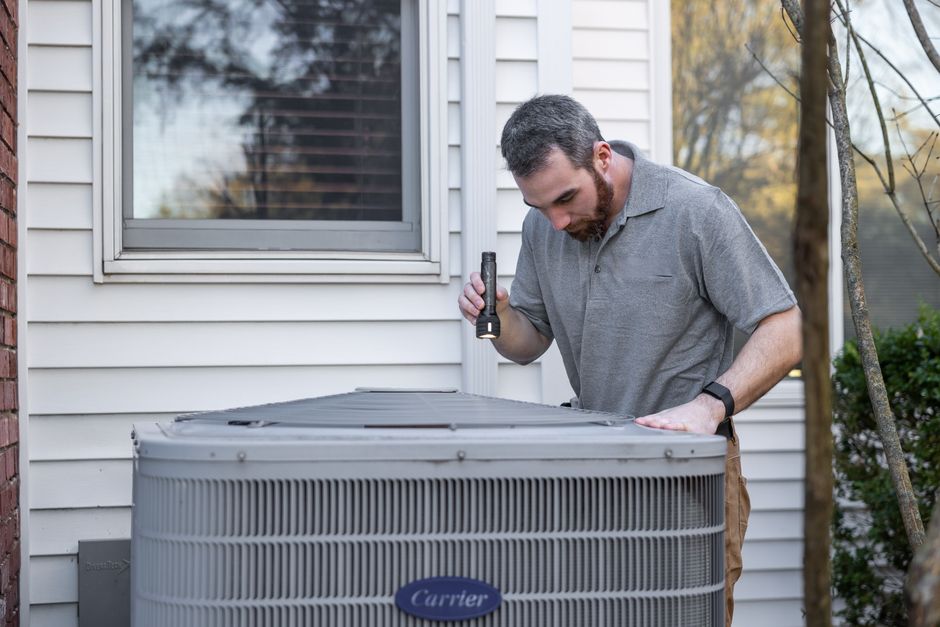
Timing decides how much each guide earns. A guide published in the middle of a heat wave arrives after most searches have passed. The same guide published a month earlier is ready when demand starts. That is why HVAC blogs benefit from planning more than most. The writer makes it simple to prepare a season's guides in one sitting.
How the writer builds an HVAC guide
Use the writer above with a topic, your trade and your town. Try a phrase like getting your heat pump ready for winter to see what it suggests. It returns five possible titles and an outline for the first one. You can compare angles quickly and pick the one your customers need most. Each test takes only a moment.
An account writes the full guide of 900 to 1200 words, using half of one AI credit. The guide follows the outline, uses clear headings and draws on the facts you supply about your systems and services. It explains symptoms in plain words and makes clear which checks are safe for homeowners. You review it, add your own technician tips and approve it. It never goes live without your say.
Safe, honest guidance homeowners can trust
Heating and cooling systems carry real safety risks, from gas lines to electrical parts. The writer keeps every guide on the safe side of what a homeowner should attempt. It recommends a licensed technician wherever the work needs one. It never invents efficiency figures, prices or rebate amounts. Accurate guides protect both your customers and your reputation.
Honest guides also reduce wasted callouts. A homeowner who learns to check the thermostat setting first may solve a simple problem alone. They remember who helped, and they call that company when the problem is real. That goodwill turns into reviews and repeat customers over time. Helpful content builds loyalty that discounts rarely do.
Linking guides to repairs, installs and plans
Each guide should guide readers toward the right service. A guide on AC warning signs links to your AC repair page, while a guide on old furnaces links to replacements. Maintenance guides point to your service plan page. These links help ready readers act and tell Google which pages matter most. Guides without them leave visitors with nowhere to go.

The writer files guides under clear topics such as cooling, heating and indoor air. Visitors browse related guides, and search engines see a company with real depth. Each topic grows into a seasonal library you can promote every year. The AI blog writer links guides to the pages they support and brings older ones back for a refresh. Last year's guides keep working this season.
How seasonal guides support the rest of your HVAC marketing
Guides give your other channels timely material to share. A spring tune up guide becomes a social post and a reminder email to past customers. Customers who were helped by a guide are more willing to leave a review. The AI marketing for HVAC companies plan connects these channels around a calendar of guides. Each season, the whole plan works from fresh, useful content.
Most HVAC companies start their blog in a quiet month and build from there. They often add maintenance reminders and review requests next. Each new tool draws on the guides already written. Let our AI online marketer map out the next step when you have time for it. Every tool waits until you switch it on.
Plan next season's guides today
Start with the question your technicians hear most in the busy season. Enter it in the writer above with your trade and town. Review the five titles and the outline for the first. Repeat for three or four topics, and next season's plan is done. Planning now means guides are ready before the rush.
For full guides, start a trial with 3 AI credits. Each complete guide uses half a credit, so the trial covers several. If the guides bring results, Pro costs $29 a month with 20 AI credits. That supports a steady schedule of seasonal guides and your other tools. Begin with one question above and get ahead of the season.
Questions about the AI blog writer for HVAC companies
- When should an HVAC company publish seasonal guides?
- Publish them a month or two before each season. Search engines need time to find and rank a guide before homeowners start searching in large numbers.
- What topics work best for a heating and cooling blog?
- Topics tied to a symptom or a decision work best. AC blowing warm air, heat pump versus furnace and how often to change filters are searched every year.
- Can guides help sell maintenance plans?
- Yes, because readers learn why regular service matters. A guide that links to your maintenance plan page turns that understanding into sign ups.
- Does the writer know the equipment brands I install?
- It knows what you tell it. Add the brands, systems and services you offer, and each guide is written around that information.